
The Great Algorithm Balancing Act: Singapore Walks the AI Tightrope
- By Winston Thomas
- April 14, 2025

Singapore, poised to celebrate six decades of remarkable progress, now stands at a different kind of precipice.
As the island nation unveils its ambitious National AI Strategy 2.0 (NAIS 2.0) — which updates the 2019 version with new enablers, courses of action and a focus on generative AI — Singapore is positioning itself as AI innovator and regulator.
But lurking in the shadows are the boogeymen of data privacy, AI bias, and those irritating "hallucinations" — AI’s knack for spitting out nonsense with the confidence of a seasoned politician. So, a crucial question then hangs heavy in the humid air of its bustling business districts: can ambition truly outpace the untamed beast of AI?
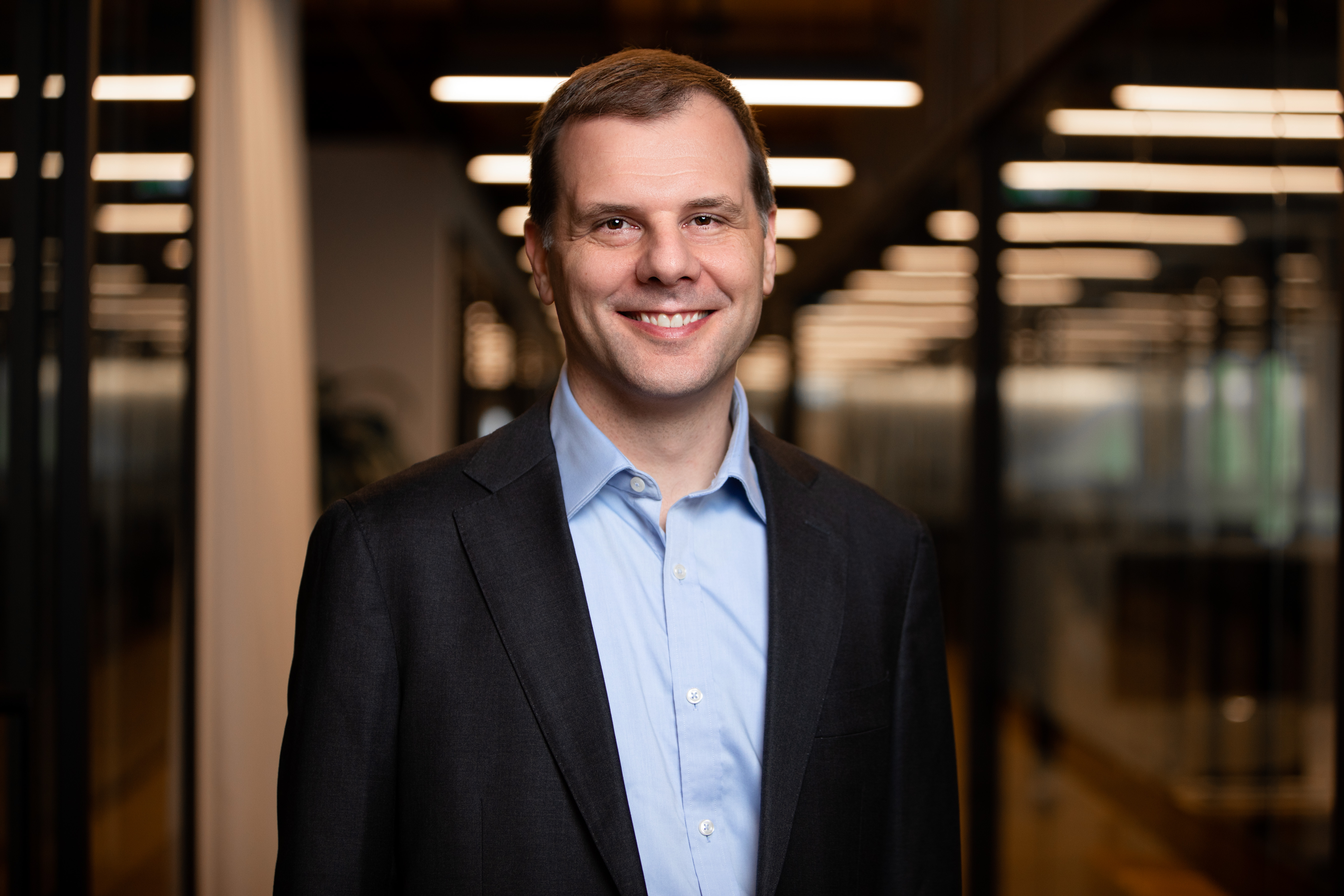
“I think it’s a really good place to start,” says David Irecki, chief technology officer for APJ at Boomi. “I don’t see us as an [Asia Pacific] region going the way of an E.U. AI Act as yet, with very hard set regulation and potentially fines behind that. Rather, countries in APAC, especially Singapore with its generative AI framework, are looking at what to focus on to improve trust and reduce risk."
The problem with trust with GenAI
That trust factor is paramount. As Irecki points out, “Salesforce did a survey amongst its customers, and 50% of them didn’t trust what AI was doing with its information.” This skepticism isn’t unfounded. Companies deploying AI systems without proper governance risk exposing sensitive data, embedding biases, or making decisions that can’t be explained — all potential landmines in Singapore’s highly regulated business environment.
A recent Boomi study in collaboration with MIT Technology Review Insights throws up some scary numbers: 45% of businesses are hitting the brakes on AI because of governance, security, and privacy nightmares. A massive 98% would rather wait it out to make sure they’re not playing fast and loose with people’s data.
It’s also where Singapore’s approach differs markedly from Europe’s heavy-handed regulations. Instead of immediate punitive measures, Singapore’s framework establishes guardrails while fostering innovation.
The framework also interconnects with Singapore’s new Model AI Governance Framework for Generative AI (MGF-Gen AI) released mid last year. So while the framework highlights key goals, MGF-Gen AI operationalizes it by encouraging the trusted AI development and responsible innovation.
For example, initiatives like the AI Verify Foundation and IMDA’s AI assurance pilot create testing methodologies for GenAI applications — a crucial step for businesses struggling with implementation.
Yet, Singapore faces unique challenges. As a global business hub where even SMEs operate internationally, the framework must account for cross-border complexities made worse by the lack of solid regional guidelines or frameworks like in the E.U.
“Using a model in one country with a specific set of language issues, cultural issues, and data concerns may provide a very different result than in another country," Irecki notes. This creates a thorny problem: bias in Malaysia might not be bias in Thailand, and Singapore’s framework must be flexible enough to accommodate these regional nuances.
The case for agent registries
For businesses looking to implement AI responsibly, data quality remains the foundation. “If you take everything back, it’s the data that we have to understand first in the organization, and it’s the data quality that we have to improve to then be able to ground these models,” says Irecki.
But what happens when multiple teams deploy multiple AI solutions without coordination? The result is often AI sprawl — different departments implementing disparate systems with varying degrees of governance.
Enter agent registries — centralized oversight systems that track AI deployments across an organization. “An agent registry is all about providing a synchronized view of all the agents in operation within your organization, being able to monitor their activities and ensure compliance with any frameworks,” Irecki explains.
Agent registries, which are part of Boomi’s broader AI Studio platform, become crucial when considering what Irecki calls the "credit card swipe" phenomenon: “Maybe I want to pull back on some projects and get the data right, but somebody in HR is going to swipe a credit card and use a large language model off the shelf.”
They become even more vital when considering Agentic AI — systems that operate autonomously and orchestrate other AI systems. Irecki offers a tangible example: “You’ll have a master agent communicating with a human about where they want to go, but in the background, it’s automatically orchestrating and talking to a flight booking agent, a hotel booking agent, and a car booking agent.”
The implications are staggering. As these systems proliferate, humans will struggle to monitor them effectively. “They’re eventually going to operate at a scale where current tools and humans can’t monitor,” Irecki warns.
The accountability conundrum
Singapore’s framework emphasizes accountability — a principle that becomes increasingly difficult to enforce as AI systems become more autonomous. “Only human oversight is going to ensure that there’s accountability for the decisions that AI makes,” Irecki insists. “Until AI can act autonomously without human intervention, we’re going to need to intervene.”
This intervention capability is precisely what Boomi is building into its AI governance platform — a “kill switch” that takes agents offline when inappropriate behavior is detected.
But Singapore’s framework assumes static AI models, while the reality is much messier. Models drift over time, creating a moving target for governance.
“Understanding what that degradation is in terms of model performance due to the change of inputs, whether it’s learning from its outputs, and how we modify that — that’s where I think minds are going to come together,” says Irecki.
For highly regulated industries in Singapore — banking, healthcare, transportation, etc. — the "black box" nature of many AI models presents a particularly vexing challenge.
“How you test AI is very important for highly regulated markets,” Irecki explains. “We’ve seen customers trying to build test policies with specific algorithm results that are within approved bounds. As long as you stay within those approved bounds, you still get a pass for how the model operates.”
However, this approach is contingent on the proper design of the testing models themselves, potentially leading to a complex and recursive scenario of AI testing AI.
The pragmatic step forward
For companies in Singapore and across ASEAN grappling with implementing AI governance, Irecki offers pragmatic advice: start with quick wins.
“If you’re looking to adopt AI for your business, find where those quick wins are — where can you get that return on investment?” Two use cases stand out: enhancing chatbots with retrieval-augmented generation (RAG) and document summarization.
But regardless of the application, effective governance requires standardization. “Until we have standardization between agents, governance is going to be really difficult,” Irecki warns.
As Singapore’s AI strategy unfolds, it offers a middle path between innovation and regulation. But for businesses caught between legacy systems and AI imperatives, the journey remains challenging.
"Many businesses are still stuck with legacy systems and outdated technology," Irecki observes. "They’re in this dichotomy of being told they have to adopt AI, drive new revenue streams and stay competitive, but are being held back by legacy systems, data silos, organizational silos, and limited resources."
In this tension between ambition and capability lies the true test of Singapore’s AI strategy — not just creating frameworks, but helping businesses transform themselves from the ground up.
Image credit: iStockphoto/CreativaImages








Winston Thomas
Winston Thomas is the editor-in-chief of CDOTrends. He likes to piece together the weird and wondering tech puzzle for readers and identify groundbreaking business models led by tech while waiting for the singularity.