
Silicon, Substations and Sovereignty: Infrastructure Is Critical for AI Success
- By Naveen Chhabra, Forrester
- June 25, 2025
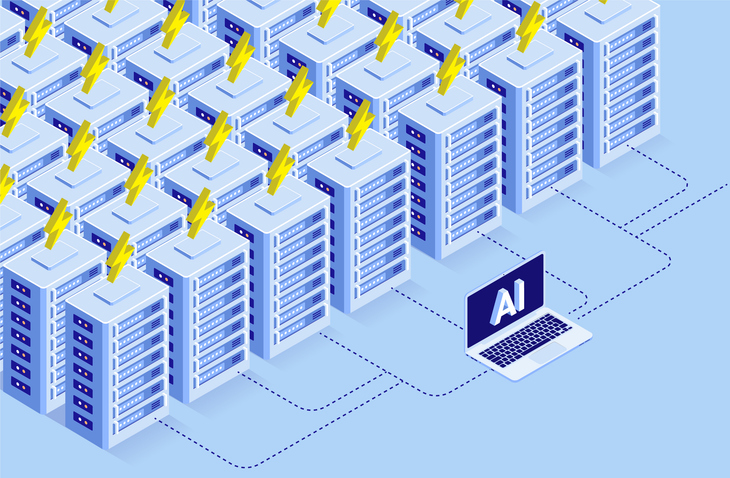
I’ve been closely following the evolution of AI infrastructure for a while now. Honestly, the pace at which things are changing is both thrilling and a little overwhelming.
If you’re in tech — or even adjacent to it — you’ve probably noticed how rapidly conversations around compute, GPUs, and scalability have gone from “optional innovation” to “mission-critical.” The artificial intelligence revolution isn’t just about algorithms — it’s also fundamentally reshaping the IT infrastructure that powers our digital world.
Having worked closely with AI infrastructure decision-makers across Fortune 500 companies, I’ve seen how their AI aspirations are motivating cloud providers to expand their physical and digital boundaries, far bigger than scaling compute. Here are the three major impacts that I’m seeing.
- Silicon is the new infrastructure imperative
I’ve watched with interest as hyperscalers shift from being chip buyers to chip makers. AWS has pledged over USD100 billion through 2025 toward AI-centric infrastructure, investing in custom silicon (Trainium and Inferentia), high-throughput networking, and sustainable data campuses. Microsoft is committing USD80 billion for its Maia chips, while Google targets USD75 billion for its TPUs. These aren’t generic data centers but purpose-built facilities optimized for AI workloads.
Collectively, hyperscalers are investing over USD300 billion to build the next generation of AI-ready data centers. While chip investments are about performance, they’re also about controlling supply and reducing dependence on vendors such as NVIDIA, whose GPUs remain scarce. This trend has deep geopolitical implications.
- Substations are needed to responsibly power AI
AI data centers consume power orders of magnitude more than traditional facilities. Schneider Electric projects 150-gigawatt capacity now through 2030 to power these AI data centers. I’ve seen how this massive demand is straining electrical grids and forcing utilities to rapidly expand capacity.
Cloud providers are becoming major energy buyers, signing agreements for nuclear, wind, and solar energy. Cooling requirements are equally challenging. Dense chip concentrations generate enormous heat, requiring sophisticated systems. This has sparked innovation such as liquid cooling.
Environmental implications remain significant. While providers invest in renewables, AI’s energy scale raises sustainability questions, driving innovation in energy-efficient architectures and advanced nuclear technologies.
- Sovereignty Drives The AI Arms Race
Sovereignty has two aspects: 1) nation states building their own AI facilities to define and control their own destiny with little to no impact from geopolitical influence and 2) cloud providers developing facilities for businesses in several regions to address profound geopolitical implications.
With increasing trade barriers and sanctions, countries are now treating semiconductor manufacturing as a matter of national security and recognizing AI infrastructure as critical to that security as well as competitiveness.
We are seeing regional AI infrastructure blocs emerge. For example, the UK’s AI mission is to be an “AI maker, not an AI taker,” and I’ve seen governments increasingly prioritize “sovereign AI.” Hyperscalers and AI specialists such as Nebius are building facilities to address this demand.
A strategic choice for enterprises
From my perspective, CIOs and enterprise architects must now view AI infrastructure as a core business capability. Choosing the right partners, selecting deployment regions, and securing computing capacity will shape competitive advantage for years.
This is kind of an arms race — one defined by who owns the silicon, controls the substations, and enables sovereign deployment. The cloud giants aren’t just scaling up but building the foundations for the next era of innovation. Enterprises that understand and act on this reality will be far better positioned in the age of AI.
The original article is here.
The views and opinions expressed in this article are those of the author and do not necessarily reflect those of CDOTrends. Image credit: iStockphoto/Overearth







Naveen Chhabra, Forrester
Naveen Chhabra is Forrester’s principal analyst. He is the infrastructure, private cloud, and infrastructure automation analyst, delivering strategic guidance to Forrester's vendor and end-user clients. Naveen’s vision for technology leaders is to leverage IT automation and to build and deliver dependable technology services. His research includes technology automation, infrastructure as code (IaC), AIOps, hyperconverged infrastructure, converged infrastructure, and subscription-based infrastructure.