
Brain Science: AI Companies Don't Have Human Intelligence Research Labs
- By David Stephen
- August 25, 2025
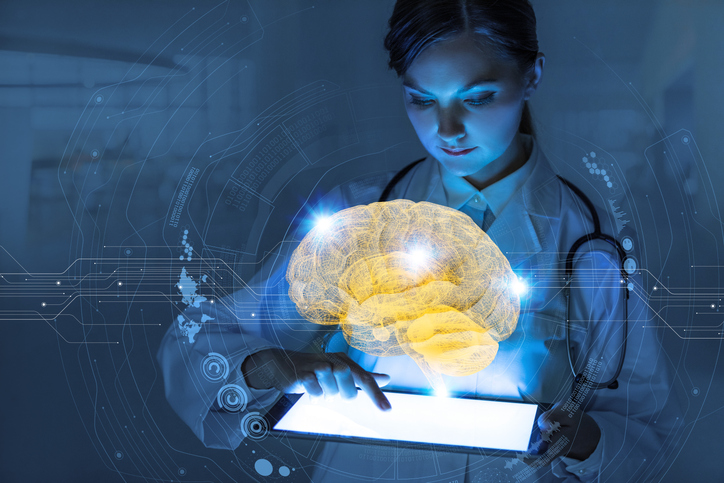
No AI company on earth currently has a Human Intelligence Research Lab. This means a lab that exists just to study and show how human intelligence works. None, zero.
This lab would not cost them as much as AI, and could become more important and profitable than their work on AI, given the world’s population. However, they don’t, even the so-called good people doing AI for humanity research. Something like, for all the investments in AI, this fraction must go to outlining [natural] human intelligence. Human intelligence is human jurisdiction. AI, regardless of whose, is based on the availability of facilities.
There is no lab, anywhere — in or of any organization — that has produced a model of how human intelligence works. Simply, there is no lab, currently, anywhere, that seems close to that goal or seeking — directly — to develop and explain how human intelligence works.
There are all kinds of human and machine cognition labs. Many often state that they are using AI to understand the human brain. There is little to no merit to any project whatsoever, around using large language models [LLMs], or other AI approaches toward understanding how human intelligence works. They have no outstanding postulate, no case for probable components — aside from neurons — and no way to show what they are doing, without AI.
Human intelligence is defined as the use of memory [or information] in the brain. Simply, excellence in using what is known is intelligence. Now, how does an individual use what is known to result in intelligence? Say there is information, how does the individual use the information for the best possible outcome, in reality? What was mechanized in the brain? What are the components of intelligence? What are the attributes? How are they similar or different from those of memory, emotion, feeling, and the regulation of internal sensations?
Maybe working on human intelligence is so hard that it seems impossible. Maybe labs have given up on human intelligence. Perhaps some have concluded that human intelligence is hopeless, so nothing can be done to change it. However, no matter the excellence of artificial intelligence, it is still not human in terms of unassisted [or unattached] possession. Neurotechnology is also not human. They are all external and will be externally accessed. They could be owned in some form or controlled by others, or subject to external servicing and management. There are no guarantees that natural intelligence would widely benefit [all humans], no matter their [AI and neurotechnology universal] adoption.
AI in education
If AI is helping in education, what exactly should AI be helping with, since AI can do it all, including aspects of work, post-college? Simply, while AI can assist understanding, what can AI currently change or not change, about the [natural, not augmented] efficiency of human intelligence?
How should AI guide learning so that, without AI, learning can advance naturally? What should be known about how human intelligence works to ensure that the architecture is used to set boundaries about AI's impending sweep of the educational system?
Human intelligence
How does any human being pass an exam? Study and answer questions in smart ways? How does anyone do an activity, with great planning and then careful execution, to have the desired outcome?
Only two factors matter in the question of human intelligence: what information exists in the brain and how it goes from one point to the other to result in [use as] intelligence?
If complex solutions are sought for problems, what makes figuring them out difficult or otherwise? What can be shown as a basic model of how human intelligence works to prospect approaches to memory, learning, comprehension and problem solving, to move the world forward by humans, wherever located, without ultimate dependencies on AI, or neurotech?
Conceptually, human intelligence is predicated on two factors, electrical and chemical signals, as sets, in clusters of neurons. Electrical and chemical signals organize information [as functions], including memory. The relay [or use] of information across memory areas results in intelligence.
The model can then show how information is organized and the attributes of the components, to output intelligence. Neurons are conceptually ruled out as the basis of information organization or transportation because they are cells. They are not that flexible. While they send axons in different directions, they, even in clusters, do not configure information or move around to transport it as extensively as information travels in the nervous system [for human life and experiences]. Those, theoretically, are the responsibilities of electrical and chemical signals, working as sets, with neurons as their domicile and carriage.
Human Intelligence Research Lab
Modeling human intelligence based on electrical and chemicals signals — empirically established in neuroscience to be involved in all functions — of neurons [for human experiences] can become a display to show how learning and problem-solving works, to enhance the dynamics of doing so, to [better] prevent AI misuse and abuse in education, training, tasks and so forth.
There are several attributes to show. There are also several directions of information organization to show. As a product or service, it is possible to have this spread, increasing the probabilities for advances, even as artificial intelligence sprawls.
AI would get better. Human intelligence should not be left behind. A dedicated research lab may turn the tide in favor of humans — directly.
The views and opinions expressed in this article are those of the author and do not necessarily reflect those of CDOTrends. Image credit: iStockphoto/metamorworks









David Stephen
David Stephen currently does research in conceptual brain science with a focus on the electrical and chemical configurators for how they mechanize the human mind with implications for mental health, disorders, neurotechnology, consciousness, learning, artificial intelligence and nurture. He was a visiting scholar in medical entomology at the University of Illinois at Urbana Champaign, IL. He did computer vision research at Rovira i Virgili University, Tarragona.