The Real Race in AI Isn't Models But the Infrastructure
- By CDOTrends editors
- November 17, 2025

While everyone obsesses over the latest foundation model dropping from OpenAI or Anthropic, the real constraint strangling enterprise AI is inference. And geography.
Which is why Groq's expansion into Equinix's Sydney data center is not about another hyperscaler flexing its muscles in the Asia-Pacific region. It's more of a bet that the future of AI infrastructure looks less like centralized GPU fortresses in Virginia and more like distributed, purpose-built compute sitting closer to where humans actually work.
“The world doesn’t have enough compute for everyone to build AI. That’s why Groq and Equinix are expanding access, starting in Australia,” said Jonathan Ross, chief executive officer and founder of Groq.
The numbers tell part of the story: the Asia-Pacific region is projected to invest USD110 billion in AI by 2028, and over half of Groq's global developers are already based there.
“Our deployment in Equinix’s Sydney data centre is our first step to bring high-performance, cost-efficient AI inference closer to the region, enabling secure, low-latency access while supporting data sovereignty and privacy. Together, we’re building the infrastructure to drive AI innovation and growth in Asia-Pacific," said Scott Albin, general manager for APAC at Groq.
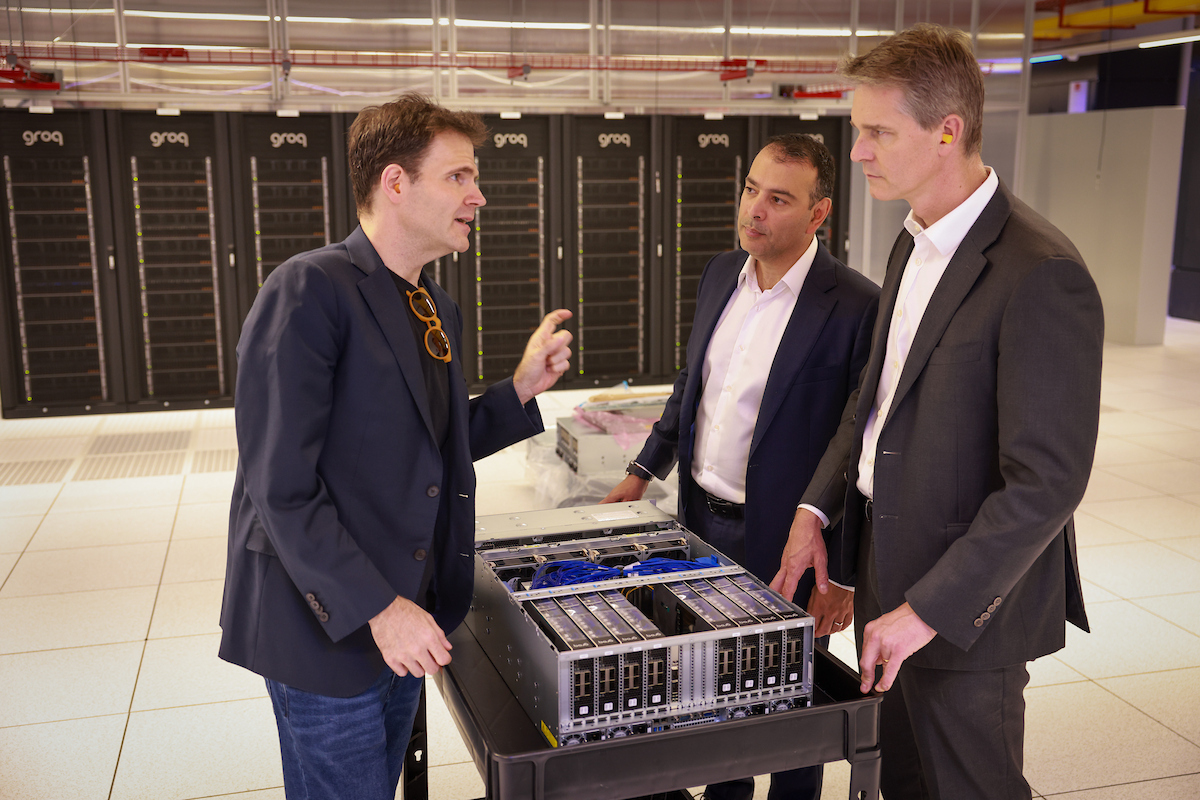
However, the more interesting question is why a company would build AI inference infrastructure in Australia when AWS, Google, and Azure already have a sprawling cloud presence across the region.
The answer comes down to three things data leaders actually lose sleep over: latency, sovereignty, and cost.
The latency tax: For real-time applications like chatbots, code generation, and fraud detection, every millisecond counts. Routing inference requests halfway around the world to a U.S. data center can fundamentally changes what's possible: A 200ms delay turns a conversational AI into a sluggish disappointment. Groq's LPU (Language Processing Unit) architecture claims 5x faster performance than GPUs, but that speed advantage is negated if your data is being ping-ponged across oceans.
The persistent sovereignty problem: Hong Kong and Australian organizations cannot simply ship sensitive data to American servers and call it a day. Data residency requirements, privacy regulations, and mounting geopolitical tensions make data sovereignty non-negotiable for financial services, healthcare, and government AI deployments. This makes having inference compute physically located in-region a key consideration.
The GPU cartel: NVIDIA's H100s are phenomenal chips. They're also expensive, power-hungry, and nearly impossible to get at scale. Groq's LPU architecture, purpose-built for inference rather than training, represents a different bet: that specialized silicon optimized for a single task will outperform general-purpose GPUs in terms of price-performance. The 4.5MW facility in Sydney isn't massive by hyperscaler standards, but that's the point. Smaller, distributed, efficient.
“Our unique ecosystems and wide global footprint continue to serve as a connectivity gateway to their customers and enable efficient enterprise AI workflows at scale,” adds Cyrus Adaggra, president for Asia-Pacific at Equinix.
What this actually means
Equinix's involvement is the underappreciated piece here. By leveraging Equinix Fabric's vendor-neutral connectivity across 270+ facilities, enterprises can plug Groq's inference directly into their existing cloud and on-prem infrastructure without wholesale migration. Its infrastructure is like LEGO blocks rather than monolithic kingdoms.
Cliff Obrecht, co-founder and chief operating officer of Canva, acknowledges Australia's “growing strength in AI and compute infrastructure” as AI workloads mature beyond experimentation. But he also highlights that location matters. The cloud promised to make geography irrelevant. AI inference is demonstrating that physics and politics remain relevant.
Frontier models are still the sexiest part of AI, pushing the boundaries of reasoning. But the infrastructure layer determining who actually runs AI at scale? Well, that race is just heating up. And it's being won in places like Sydney, not just Silicon Valley.
Image credit: iStockphoto/Mininyx Doodle