
OpenAI’s 4o Image Generation Changes the Game
- By Paul Mah
- April 09, 2025
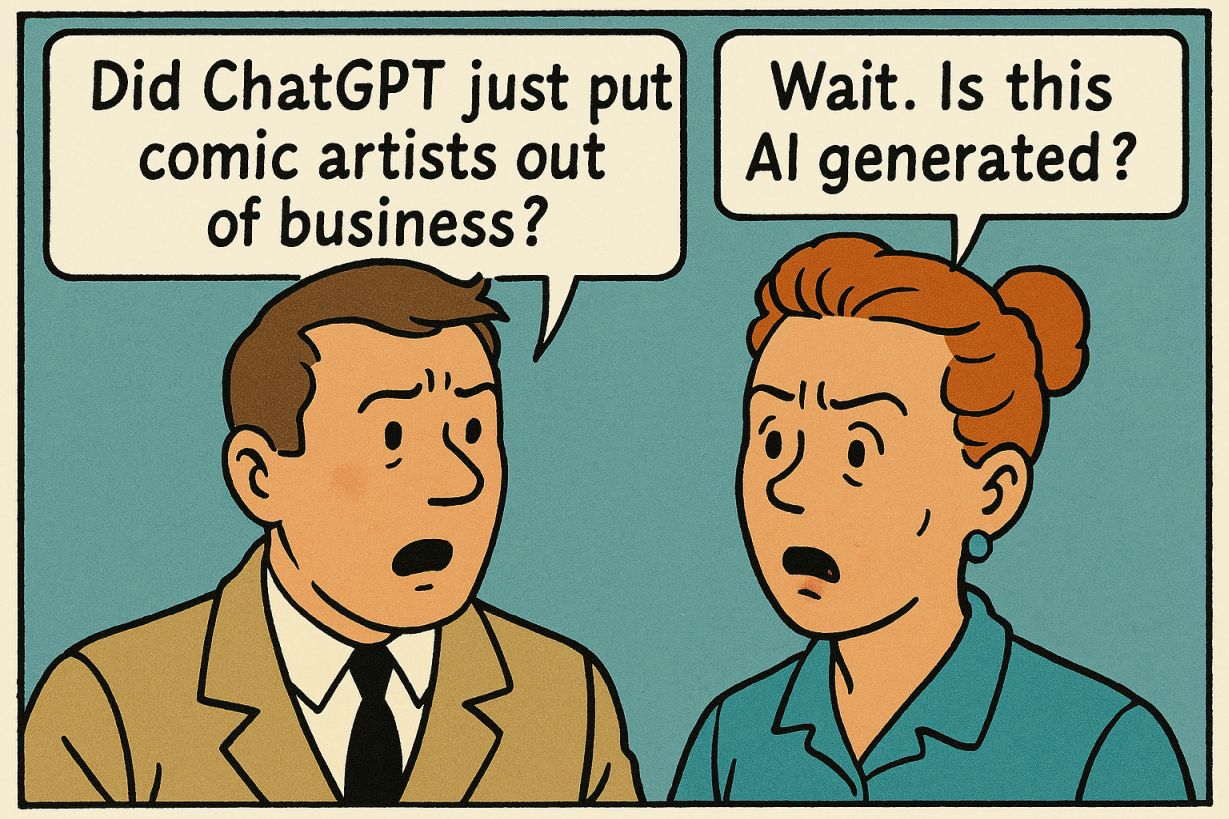 OpenAI has just unveiled 4o Image Generation, and it might be the "ChatGPT moment" for cartoon artists and graphic designers everywhere. Built into the GPT-4o model, the image model is significantly better than DALL-E 3, released in October 2023.
With major improvements in both output quality and prompt handling, this update sets a new bar for what AI image generation can do. And like a steadily growing list of capabilities developed at OpenAI, it is now available even for free users.
Key improvements
It comes with two key advancements that significantly enhance its image generation capabilities: improved text rendering and a stronger ability to follow complex prompts. These updates address longstanding challenges in AI-generated imagery and open the door to broader, more practical applications.
For one, text within images, a common stumbling block for many models, is now rendered with much greater consistency. While it's not flawless, the results are accurate enough for real-world use. Equally important is GPT-4o’s improved comprehension and execution of complex prompts. The model now adheres more reliably to nuanced instructions, producing images that better reflect user intent. It can also manage greater complexity within a single scene, handling up to 20 distinct objects with precision.
According to OpenAI, GPT-4o features enhanced "binding" of objects to their attributes and spatial relationships, ensuring more coherent and realistic outputs. Reflections appear in mirrors, objects are grounded properly, and designs are accurately depicted on clothing and surfaces.
Widespread impact
AI image generation is poised to have a significant impact across various industries, particularly in marketing, illustration, and media production. Although still in its early stages, its rapid evolution suggests that professionals in these fields may soon face major shifts in how visual content is created. Its ability to generate consistent images from text prompts means marketers, for instance, might no longer need to rely on external creative agencies for simpler visuals.
Early adopters are already experimenting with novel use cases, such as rearranging furniture in photos via prompts, generating full AI-driven video podcast recordings, turning hand-drawn sketches into photorealistic images, transforming personal photos into coloring books, and crafting custom comic strips.
However, the ease with which logos and brand assets can be inserted into highly realistic images raises concerns. Brands may soon confront new challenges in managing misuse and maintaining visual integrity. As the technology advances, ethical considerations and copyright issues will also need to be addressed to ensure responsible use.
Image credit: GPT-4o






Paul Mah
Paul Mah is the editor of DSAITrends, where he report on the latest developments in data science and AI. A former system administrator, programmer, and IT lecturer, he enjoys writing both code and prose.