
Singapore Airlines Cracks AI-First Development Puzzle
- By Winston Thomas
- July 20, 2025
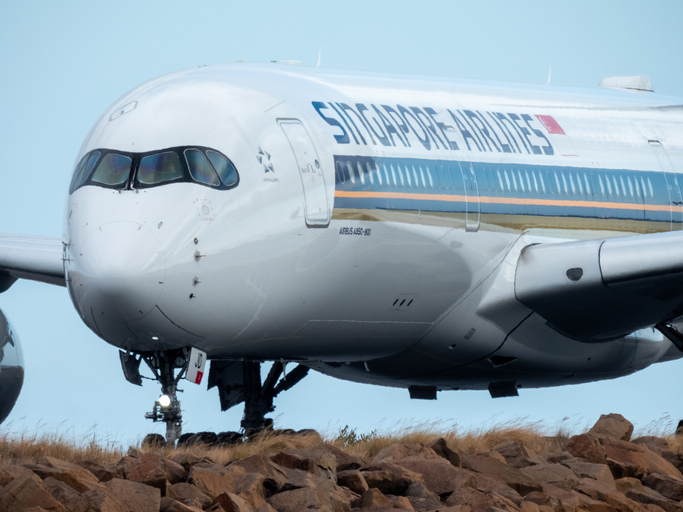
In a conference room in Sydney, Tanguy Fournier Le Ray is describing nothing less than the complete reinvention of software development. The co-founder and Asia chief executive officer of PALO IT has just helped Singapore Airlines (SIA) collapse an 11-week development cycle into five weeks — not through overtime or corner-cutting, but by fundamentally rewiring how humans and AI collaborate.
“We realized we had to forget how we’ve been building software for the past 15 years and build a delivery model which is AI first, rather than AI augmented,” he explains. And by doing that, Fournier Le Ray has created a blueprint for the future of enterprise development — tested at 30,000 feet.
When Copilot becomes captain
Like countless tech companies in late 2023, PALO IT deployed GitHub Copilot expecting productivity miracles. Instead, they got marginal gains.
“We just augmented our standard SDLC with Copilot and hoped for the best, but didn’t really notice major productivity benefits,” Fournier Le Ray recalls. “It was disappointing. So we thought, okay, we have to be missing something.”
That “something” was everything. Instead of asking how AI could help humans code faster, PALO IT asked a more radical question: What if we designed the entire development process around AI capabilities first?
The answer became Gen-e2 (Generative AI Enhanced Engineering), treating GitHub Copilot not as a smart autocomplete but as the primary architect of software systems.
“We realized that the more context you give to Copilot, the more accurate it becomes,” Fournier Le Ray explains. “So we came up with a product repository approach where we feed all product artifacts — code, documentation, design — into a single repository structure so AI can understand the context really well.”
The context revolution
Traditional development teams often scatter information across multiple platforms, including JIRA, Confluence, and Miro. Gen-e2 consolidates everything into a unified knowledge base that acts as an AI’s memory palace.
But context alone isn’t enough. PALO IT built “guardrails” — rules that encode coding guidelines, security policies, and architectural patterns, transforming Copilot from a creative assistant into an enterprise-grade software factory.
“We feed coding guidelines, coding conventions, security guidelines into those rules, and it means AI becomes enterprise grade,” Fournier Le Ray says. “We hear a lot about vibe coding for weekend projects, which is amazing, but our enterprise clients tell us it’s fun but has nothing to do with their enterprise world.”
The results: 95% AI-generated code, higher test coverage than their best human teams, and self-updating documentation.
The Singapore Airlines experiment
Corporate pilots usually take months. Singapore Airlines cut through bureaucracy with unusual decisiveness.
“Usually discussions with corporates take four or five months because it’s new, because they’re not sure,” Fournier Le Ray notes. “But the SIA tech leadership was very bullish. They said, ‘Yeah, look, it makes sense. We’re going to try.’”

The pilot — a meal selection feature for SIA's booking website — became proof that reverberated through the airline’s IT organization. Build success rates jumped above 90% within three weeks. Team sentiment surveys revealed something rare: developers actually enjoyed the new workflow.
“Today we’re scaling to about 700 people within SIA,” Fournier Le Ray reveals. “They’re very happy with the outcome and quite aggressive in terms of how they're trying to adopt this.”
The new team rules
Gen-e2 teams shrink to minimal units: two engineers, one product person, one designer. These units then feed context to the AI in the morning and watch it generate code in the afternoon.
“They generate in a few seconds or minutes, and they don’t touch the code anymore,” Fournier Le Ray explains. “If it’s not the right output, they modify the context or the rules, but they don’t go and change the code themselves, because otherwise we’re not really fixing the source of the problem.”
Engineers become conductors rather than musicians, orchestrating AI performance instead of writing code line by line. The change demands senior developers who understand entire systems, not junior programmers implementing isolated features.
“The gap we’re going to see is we need senior people,” Fournier Le Ray acknowledges. “How do we get the junior guys who are just fresh out of university to a level where they can review the output from AI without coding?”
The resistance and revelation
Senior developers initially resisted, protective of their craft.
“We got quite a lot of pushback until they tried it,” Fournier Le Ray admits. “Most of our guys, when they start on a project, say there’s no going back because we’re not going to go back to the old ways of working.”
The pattern repeats across disciplines. Everyone draws lines around their specialty, convinced AI can automate others’ jobs but not theirs.
“It’s always like, you go to a DevOps person, they’re like, ‘Yeah, you can automate the engineering part, not my part,’” Fournier Le Ray observes.
Meanwhile, Gen-e2’s reach expands: infrastructure as code, legacy replatforming, product discovery — all AI-assisted.
The build vs. buy revolution
Perhaps the most profound implication isn’t how software gets built, but what gets built. For fifteen years, enterprises followed a “buy before build” philosophy, purchasing SaaS rather than developing custom solutions.
“We even see now some of our clients asking us, ‘Wait a minute. I went for a buy strategy for SaaS products for the past 15 years because build is too expensive. But my SaaS products don’t do what I want. Now maybe it means I can do build,’” Fournier Le Ray reveals.
If development costs drop 50% or more, the economic calculus changes completely. Custom software becomes competitive with off-the-shelf solutions.
Future shock, present tense
The Singapore Airlines deployment is a preview of a future arriving faster than expected. In boardrooms globally, executives ask the same question SIA’s leadership asked: If we can build software twice as fast with half the people, what are we waiting for?
As AI capabilities accelerate and enterprises like Singapore Airlines prove the methodology works at scale, the software industry faces its inflection point. The question isn’t whether AI will transform development, but how quickly human developers can adapt to stay relevant.
For now, someone still needs to tell the AI what to build. But even Fournier Le Ray isn’t betting on how long that will last.
Image credit: iStockphoto/SCM Jeans






Winston Thomas
Winston Thomas is the editor-in-chief of CDOTrends. He likes to piece together the weird and wondering tech puzzle for readers and identify groundbreaking business models led by tech while waiting for the singularity.