
When Your Data Center Literally Can’t Handle the Heat
- By Winston Thomas
- November 03, 2025
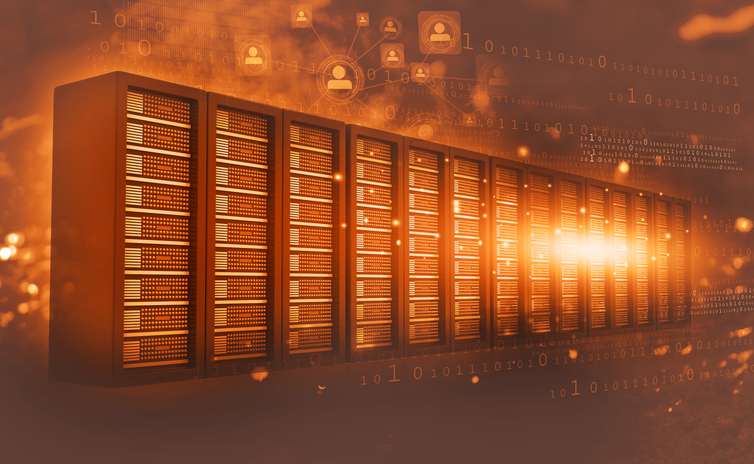
While venture capitalists invest billions in the next ChatGPT killer and governments rush to establish “AI sovereignty,” an unglamorous problem is threatening to be a party pooper: Asia’s data centers are overheating, and nobody's talking about it loudly enough.
The region’s data center power consumption is projected to explode from 9 TWh in 2024 to 68 TWh by 2030. It’s a seven-fold increase in six years. Global data center electricity demand is expected to nearly double from 415 TWh in 2024 to around 945 TWh by 2030, with Asia shouldering a disproportionate burden due to its tropical climate and rapidly expanding digital economy.
“The Asia-Pacific region presents a dynamic and rapidly evolving data center landscape,” says Abel Gnanakumar, vice president of commercial for Asia, Middle East & Africa at Copeland. He notes that colocation and edge data centers, which account for approximately 70% of the market, aren’t ready for what’s coming.
The GPU time bomb
Traditional data center racks consumed a cozy 8 kW back in 2021. Today’s AI workloads? Let’s try 30 kW. GenAI can increase power consumption by more than 10 times, and traditional air-cooling methods struggle once power density exceeds 10-15 kW per rack. It’s like trying to cool a jet engine with a desk fan.
“As AI workloads continue to scale, data centers are facing unprecedented thermal challenges. The new generation of AI servers operates at significantly higher temperatures and demands greater cooling capacity, elevated water temperatures, and uncompromising uptime — all while maintaining a strong focus on sustainability,” Gnanakumar explains.
The physics is troubling. Every watt of computing power is converted into a watt of heat. When you’re running GPU clusters for training LLMs, you're operating a very expensive space heater that occasionally does math. And in Singapore's humidity or Jakarta’s tropical heat, that math gets exponentially more expensive.
The water problem nobody discusses
A 1 MW data center infrastructure can consume up to 25.5 million liters of water annually, equivalent to the daily consumption of approximately 300,000 people. Now multiply that by the region’s explosive growth trajectory.
Gnanakumar points to a telling project with China Mobile in Zhangjiakou, where Copeland’s ZDV series variable speed scroll compressors helped achieve a Power Usage Effectiveness (PUE) below 1.25 and “ultra-low Water Usage Effectiveness.” The system featured an innovative heat recovery module, delivering the kind of efficiency that keeps facilities managers up at night—in a good way.
However, the real issue is that the regional cooling market is expected to reach USD7.3 billion by 2031, driven by approximately USD20 billion in cross-border investment in 2024 alone. That’s a lot of capital chasing a problem that's only getting worse.
Oil-free and friction-free: The new mantra
Copeland’s betting big on what Gnanakumar calls “Oil-Free Centrifugal Compressors featuring proprietary Aerolift bearing technology.” Strip away the marketing speak, and you have something genuinely clever: bearings that generate hydrodynamic lift of the shaft without the need for magnets, sensors, or electronics.
“This innovation not only enhances reliability but also enables rapid restart capabilities, a critical feature for data centers aiming to maintain server temperatures during power interruptions,” says Gnanakumar. In a region where grid stability can be sort of “variable,” that matters.
The efficiency gains are substantial, with up to 10% higher full-load efficiency and a 40% improvement in integrated part-load value compared to conventional systems. These compressors can withstand hundreds of thousands of start-stop cycles, which is particularly useful when deploying capacity in phases, as most colocation operators do.
Liquid courage
According to industry analysis, 22% of data centers are now utilizing liquid cooling techniques, and this number is increasing rapidly. Direct-to-chip cooling, immersion tanks, and rear-door heat exchangers are solutions that sound like science fiction, but they’re becoming standard operating procedures for anyone serious about AI workloads.
“Asia Pacific’s data center liquid cooling market is projected to grow at a CAGR of 15% from 2025 to 2033,” Gnanakumar notes, driven by space-constrained, high-energy-cost markets like Singapore, Japan, and South Korea. Liquid cooling is about surviving in markets where you literally can’t build bigger because there’s no room and no power.
The infrastructure challenges are real, though. Try explaining to a landlord why you need to retrofit a high-rise building to support tanks of dielectric fluid. The weight distribution alone makes structural engineers nervous.
The sustainability trap
Asia’s nations have committed to aggressive decarbonization targets. For example, ASEAN aims for a 32% reduction in energy intensity by 2025, while simultaneously building infrastructure that’s fundamentally at odds with these goals. With ASEAN's energy mix still dominated by non-renewable resources, the imbalance between data center growth and low progress of grid decarbonization can potentially lead to emissions 7.6 times higher than initial projections.
Gnanakumar remains diplomatic: “Environmental regulations and sustainability goals are reshaping air-cooled chiller design, driving demand for next-generation oil-free compression technologies that deliver high efficiency, simplify application and support low-global warming potential refrigerants.”
The company’s pushing R-1234ze, R-515B, and R-513A, refrigerants with GWP ratings that won’t make climate activists reach for the pitchforks. However, choosing the refrigerant is the easy part. The hard part is powering this entire circus with renewable energy when the grid can barely keep up with current demand.
The edge case
Micro and edge data centers present their own cooling riddles. Lower footprints, less infrastructure, faster deployment and all the same thermal physics compressed into a smaller, less forgiving package.
Copeland’s variable speed compressor technology shines here, Gnanakumar argues, offering “industry-leading Annual Energy Efficiency Ratios, particularly excelling in high ambient conditions where it demonstrates a significant double-digit performance advantage.”
It’s the kind of turnkey approach that appeals to operators who don’t have the luxury of a massive engineering team or months of deployment time.
The coming quantum freeze
When asked about quantum computing’s cooling implications, Gnanakumar becomes almost zen-like: “Quantum computing will no doubt call for more advanced cooling technologies and potentially increasing energy costs. Most importantly, this must all be done without sacrificing reliability, uptime rates, and business continuity.”
Quantum systems operate at temperatures approaching absolute zero. Current AI infrastructure runs so hot that it can fry an egg. Future data centers may need to accommodate both in the same facility. Good luck with that thermal management puzzle.
“Future-ready facilities should accommodate hybrid environments with various workloads without major retrofits,” he suggests. “Modular cooling systems with wide operating maps will be critical.”
The bottom line
Asia’s data center boom isn’t slowing down. Data center capacity in the Asia Pacific region is projected to double to around 30GW by 2027/2028, with an expected supply shortage of 15-25GW. The AI revolution everyone’s betting on won’t happen without solving the cooling crisis first.
The companies that crack this code by building infrastructure that’s simultaneously more efficient, more sustainable, and more resilient will own the next decade of digital infrastructure. Those that don’t? Well, they’ll learn the hard way that in the age of AI, you either keep your cool or you’re cooked.
Image credit: iStockphoto/bluebay2014









Winston Thomas
Winston Thomas is the editor-in-chief of CDOTrends. He likes to piece together the weird and wondering tech puzzle for readers and identify groundbreaking business models led by tech while waiting for the singularity.