
Why AI and Digital Twins Matter as Humanoids Enter Industrial Operations
- By Alex Teo, Siemens Digital Industries Software
- September 13, 2026
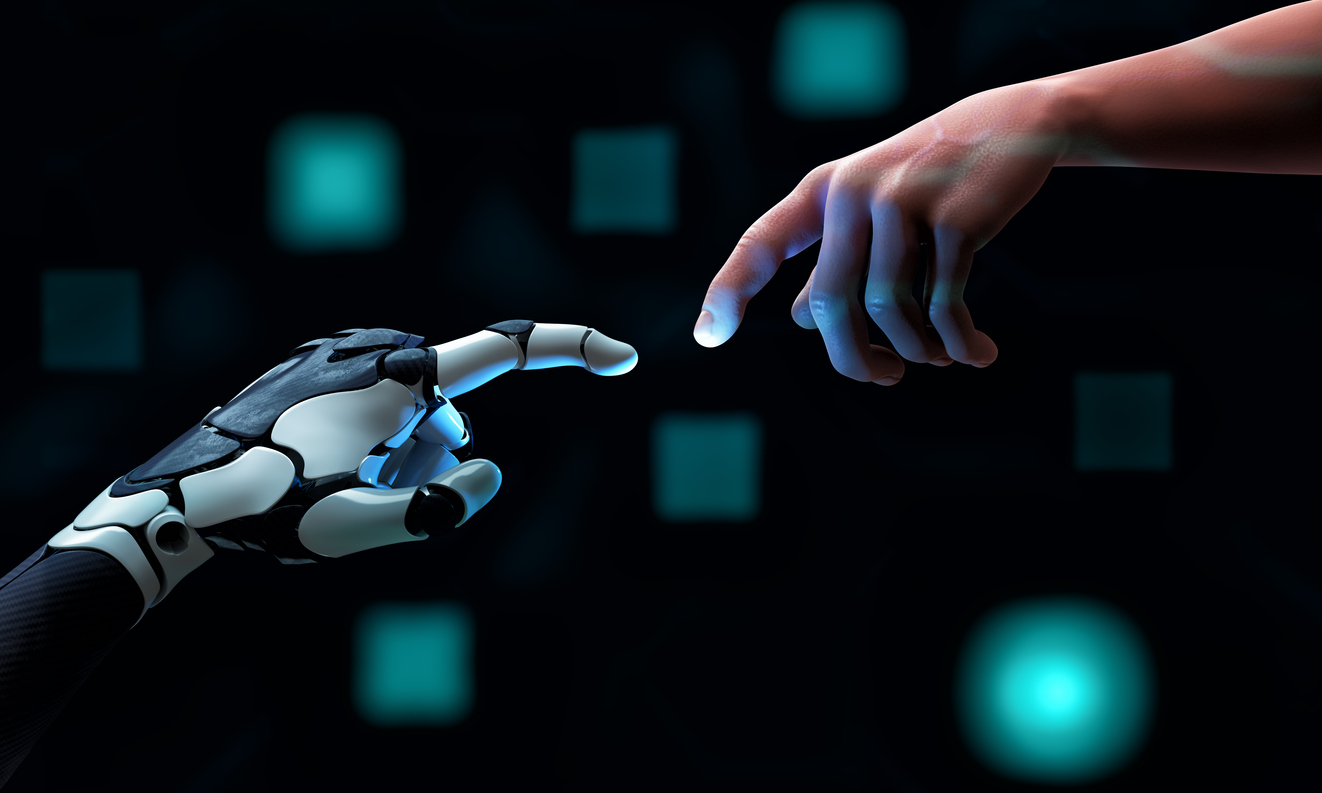
Once limited to eye-catching technology demonstrations, humanoid robots are approaching production readiness. Manufacturers across Southeast Asia are under increasing pressure to improve productivity while managing labor shortages, rising costs and increasingly complex production demands. As humanoids move closer to real-world deployment, organizations should consider how AI and digital twins can prepare them for the next phase of industrial automation.
The region is already moving beyond proofs of concept to real-world experimentation. Singapore's upcoming Physical AI testbed at Punggol Digital District will enable government agencies and industry partners to research, test and deploy autonomous robots in a live mixed-use environment, generating the operational data and real-world experience needed to accelerate commercial adoption. As these initiatives bring humanoid robots closer to industrial deployment, manufacturers will increasingly depend on AI and the digital twin to train, simulate and optimize robotic behavior before it reaches the factory floor.
Building the intelligence behind humanoids
Much like human workers, humanoids must be trained to perform specific tasks. Because humanoids are designed to adapt to different processes and operating environments, organizations must calibrate them for the specific tasks and conditions in which they will operate. For organizations operating high-mix, high-value production lines with increasingly shorter production cycles, reducing robot training time can accelerate deployment while minimising operational disruption.
Siemens estimates that training a humanoid can take upwards of two weeks. Without AI or a digital twin, the process would take significantly longer and, in some cases, may not be feasible at all.
It is impractical to prepare a humanoid for every scenario it may encounter. Physical AI, which combines vision, perception and sensor feedback to enable real-world interaction, allows robots to make decisions and adapt dynamically as conditions change. Yet even seemingly simple tasks can become highly complex in unpredictable industrial environments.
This is where AI becomes a critical enabler. Instead of relying solely on repeated physical testing, manufacturers can use AI to help humanoids generalize from previous experience, allowing them to adapt to new tasks and changing operating conditions without extensive reprogramming. Combined with the digital twin, AI becomes a powerful tool for training, testing and continuously improving robotic performance before they reach the factory floor.
Training before the factory floor
By combining the digital twin's simulation capabilities with AI, manufacturers can create virtual replicas of factories and production lines where humanoids can practice tasks, solve problems and learn from thousands of different scenarios before entering the real world. Unlike physical environments, where testing is constrained by time, cost and operational disruption, simulation enables organizations to experiment rapidly and safely while continuously refining robotic behavior.

This approach becomes increasingly valuable as Southeast Asia strengthens its position as a global hub for advanced manufacturing. As the region attracts growing investment in sectors such as electronics, semiconductors and automotive manufacturing, digital twins enable organizations to test and optimize robotic workflows before introducing them into live production environments, reducing implementation risks while accelerating adoption.
Compared with conventional robot programming, AI and simulation can reduce what once took months or even years to just a few weeks. By validating humanoids across thousands of virtual scenarios, manufacturers can improve robot readiness, reduce engineering effort, shorten commissioning cycles and accelerate deployment while improving the value of automation investments. Rather than relying on repeated physical testing, organizations can identify issues earlier, minimise production downtime and deploy robots with greater confidence.
Preparing for industrial deployment
Humanoid robots are not a one-size-fits-all solution, but they offer manufacturers a new form of flexible automation. Advances in AI, simulation and digital twins are transforming them from experimental concepts into practical industrial assets.
The technologies that make this possible are already being applied in real manufacturing environments. In a recent collaboration between Siemens, NVIDIA and Humanoid, a humanoid robot successfully performed autonomous logistics tasks in Siemens' electronics factory. Powered by NVIDIA's physical AI stack and integrated with Siemens Xcelerator, it demonstrated how AI, simulation and industrial integration can support the safe and effective deployment of humanoid robots in production.
As industrial AI continues to mature, organizations will need more than sophisticated robots to realize its benefits. They will require the digital capabilities to train, integrate and continuously optimize them within existing operations.
Looking beyond robotics
Humanoid robots may soon become another tool on the factory floor, but their success will depend far less on advances in hardware than on the intelligence behind them. AI and digital twins provide the foundation for manufacturers to train robots faster, validate them safely and integrate them seamlessly into complex industrial environments.
For Southeast Asian manufacturers investing in the next generation of advanced manufacturing, preparing for humanoids is not simply about adopting a new type of robot. Success will depend on developing the AI, simulation and digital capabilities that enable robots to learn faster, adapt to changing production environments and integrate safely into existing operations. Those foundations will determine not only how quickly organizations can deploy humanoids, but also how effectively they can integrate, manage and continuously improve them as industrial automation evolves.
This article is based on an earlier articles: AI that onboards your humanoid, The AI putting the “human” in humanoid
The views and opinions expressed in this article are those of the author and do not necessarily reflect those of CDOTrends. Image credit: iStockphoto/Shutter2U







Alex Teo, Siemens Digital Industries Software
Alex Teo is the vice president and managing director for Southeast Asia at Siemens Digital Industries Software.