
Why Your Company Is Still Waiting for the Elusive AI Revolution
- By Winston Thomas
- November 14, 2025
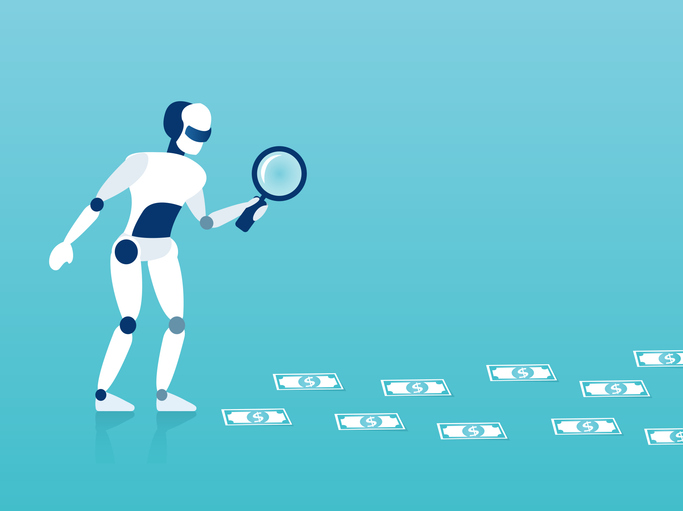
There's a moment when every tech leader instantly realizes the implementation has a logical error. For Kazunori Fukuda, managing director of Sansan’s Thailand subsidiary, it came during the development of an AI model designed to digitize business cards. The system, powered by a general-purpose AI, was unable to distinguish between corporate emails and personal ones.
“Multi-purpose AI fails at specialized, high-stakes enterprise problems,” Fukuda recalls. “Automation without contextual understanding is simply inefficiency at scale.”
If your AI investments haven't moved the needle, your strategy isn't doomed to fail. It's the gap between AI's explosive promise and its actual utility in enterprise contexts.
Motion vs. momentum: Spot the difference
So what’s going wrong? According to Fukuda, companies are confusing motion with momentum. “When AI produces more dashboards, summaries, or drafts but no real clarity or momentum, it's just noise,” he says. The flood of what he calls “AI slop”—low-quality, machine-generated work that mimics productivity without creating value—has become the corporate equivalent of junk mail.
For digital leaders, the diagnostic is simple: Real productivity requires “clarity and compounding value.” When Sansan's AI-driven invoice solution, Bill One, reduced a client's month-end closing time by 40%, it wasn't just about speed. The real win: it freed the finance team from drudgery to focus on strategic work. “AI should move people closer to their mission instead of drowning them in output.”
This insight emerged from hard experience. Sansan’s engineers had to return to first principles, retraining their system on high-resolution enterprise data and pairing it with expert human review. The result was a reminder that true intelligence is a hybrid, combining machine precision with human judgment, rather than replacing one with the other.
Why human context amplifies the algorithm
The human element matters more than Silicon Valley likes to admit. Sansan was born from the ritual of exchanging business cards, a deeply personal moment of trust and connection. “AI can't replace that,” Fukuda says. “What it can do is amplify its value.”
A partner in Japan, after digitizing thousands of cards with Sansan, discovered relationship patterns they’d never noticed before: hidden networks across departments, industries, and markets. The data didn't replace the encounter; it showcased its deeper potential.
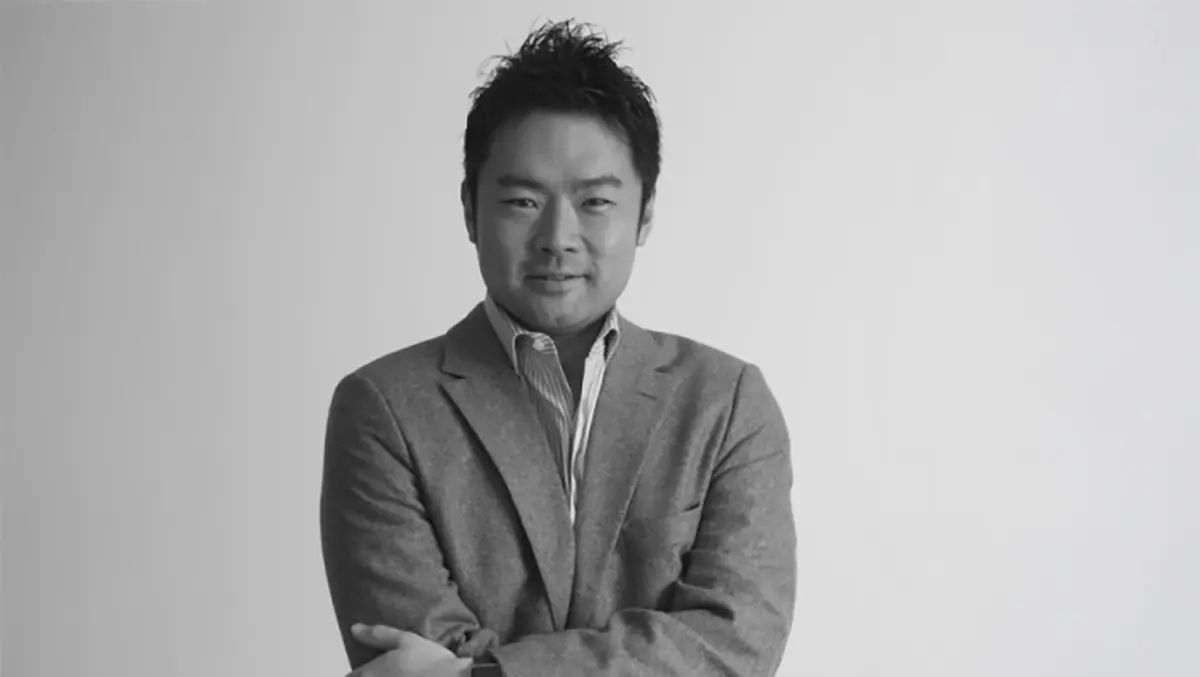
For CTOs and CDOs, this reframes the question: instead of asking “What can AI automate?” ask “What human insights can AI amplify?”
This question is critical in Southeast Asia. With over 90% of the region’s population adopting smartphones, it’s mobile-first by necessity. Yet its business culture remains rooted in personal contact. In Thailand, Indonesia, and Vietnam, Fukuda's team observed that invoice approvals often occur through messaging apps. They integrated mobile approval flows directly into Bill One, enabling users to complete formal processes without disrupting their communication habits.
Thai Takenaka, a construction firm, used the same system to digitize invoice management across 38 project sites. This transformed over 2,000 paper invoices monthly and saved more than 4,800 work hours annually. “Technology must adapt to people's behaviors, not the other way around,” Fukuda notes.
Shadow AI: A strategic opportunity, not a threat to strategy
Many tech teams loathe “shadow AI”, those unsanctioned, employee-driven experiments with tools like ChatGPT and Notion. But rather than see it as a threat, Fukuda sees an opportunity.
Early in 2025, many Sansan employees were already using AI tools before the company had formalized policies, raising valid concerns about data exposure. But one of those early experiments led to an internal search prototype that inspired a company-wide knowledge management feature.
“We structured creativity and innovation, instead of suppressing it,” Fukuda says. The company introduced formal AI ethics and sandbox programs, encouraging experimentation within clear, accountable boundaries. By mid-2025, nearly 100% of Sansan's employees were actively using AI in their daily work, not because they were told to, but because it had become second nature.
The shift: Culture over cost
Looking toward 2030, Fukuda envisions workplaces evolving into ecosystems of co-creation, where human insight and machine intelligence continuously inform each other. Achieving this requires two fundamental shifts: “In the boardroom, leaders must stop viewing AI as a cost-saving exercise and start treating it as a cultural transformation. And in everyday work, employees must see AI as a collaborator,” he says.
The real promise of an AI-empowered future isn't efficiency for its own sake. It's shared growth through human-centered innovation. That business card exchange — that moment of trust between two people — remains irreplaceable. The question for 2026 isn't whether AI can automate everything, but whether we're wise enough to recognize what it shouldn't.
Image credit: iStockphoto/Feodora Chiosea







Winston Thomas
Winston Thomas is the editor-in-chief of CDOTrends. He likes to piece together the weird and wondering tech puzzle for readers and identify groundbreaking business models led by tech while waiting for the singularity.