The Hidden Physical Empire Behind the Cloud
- By CDOTrends editors
- December 08, 2025
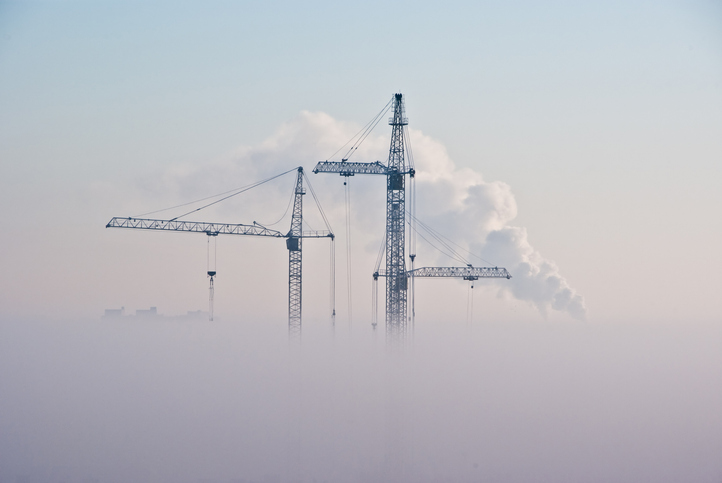
The cloud isn't floating anywhere but being hammered into existence by construction crews across the globe, one massive facility at a time. While tech companies sell us on the ethereal promise of AI and digital transformation, they're quietly building one of the largest infrastructure booms in modern history. That bill is now eclipsing the GDP of entire nations, says Allianz Commercial’s The Data Center Construction Boom report.
By decade’s end, companies across the compute power value chain will need to invest up to USD7 trillion into data centers to meet worldwide AI demand. The U.S. and China are leading this frenzy, with tech giants pouring hundreds of billions of USD into server farms that demand industrial-scale power sources and cooling systems. The so-called hyperscalers, including Amazon, Microsoft, and Google Cloud, accounted for nearly two-thirds of global cloud revenue earlier this year.
But here's where reality catches up with digital dreams: a typical AI data center now consumes as much electricity as 100,000 households, and demand keeps surging. Global electricity demand from data centers is set to more than double over the next five years, consuming around 945 TWh by 2030, as Japan consumes today.
“Construction projects as complex and extensive as data centers require significant time and resources,” says Darren Tasker, head of construction for Americas at Allianz Commercial. “Typically, they require project-specific policies given their size and their unique risk profile that demands specialized insurance.”
The scale can defy comprehension. Individual projects now exceed USD20 billion, up from just a few hundred million a few years ago. Chris Fancher, U.S. head of construction property at Allianz Commercial, observes: “The scale of a USD20bn+ facility can involve tens of thousands of workers on site at peak times, with significant equipment and building supplies moving in and out. Timings can be tight. This requires expert coordination, as any missteps or faulty workmanship can lead to potential losses or costly delays.”
The U.S. dominates, projected to control roughly two-thirds of global data center power demand with 81 gigawatts (GW) by 2028. Northern Virginia, Atlanta, and Chicago saw data center supply surge 34% year-over-year in 2024, with vacancy rates plummeting as operators grapple with elevated construction costs and persistent shortages in critical materials like generators, chillers, and transformers. China is racing to keep pace with Greater Beijing, which now alone accounts for roughly one-tenth of global hyperscale capacity.
Europe trails behind but is accelerating fast, with pipeline activity jumping annually. London and Dublin lead the pack, each boasting over one gigawatt of capacity.
Asia Pacific, representing roughly 30% of global capacity, is primed for explosive growth, particularly in India, Malaysia, and Indonesia. “As the demand for data centers in the region surges, it is crucial that parties fully understand the risks involved during construction and operation,” says Christian Sandric, regional managing director of Allianz Commercial Asia.
You can imagine the environmental toll to be staggering — and it is. Large data centers can consume up to 19 million liters of water daily, which is sometimes equivalent to the water use of a town of 50,000 people. Fire risk from lithium-ion batteries, heat management challenges, and the fact that about 56% of data center electricity comes from fossil fuels all compound the problem. Rising global temperatures threaten more than half of the world's top data center hubs.
Power issues cause 45% of all impactful outages, prompting operators to generate on-site electricity through renewables, gas, and, potentially, small nuclear reactors. It's infrastructure built atop infrastructure, all to keep ChatGPT running smoothly and your Netflix buffer-free.
It’s all one big irony. The “dematerialization” of our digital economy requires one of history's most intensive material buildouts. Every cloud-based service, every AI query, and every streaming video rests on this hidden empire of concrete, steel, and spinning turbines. It means we may think we are escaping the physical world by going online, but in reality, we're just hiding it better.
Image credit: iStockphoto/honley