Why Finance CDOs Should Care About Indonesia’s Digital Infrastructure Race
- By CDOTrends editors
- January 19, 2026
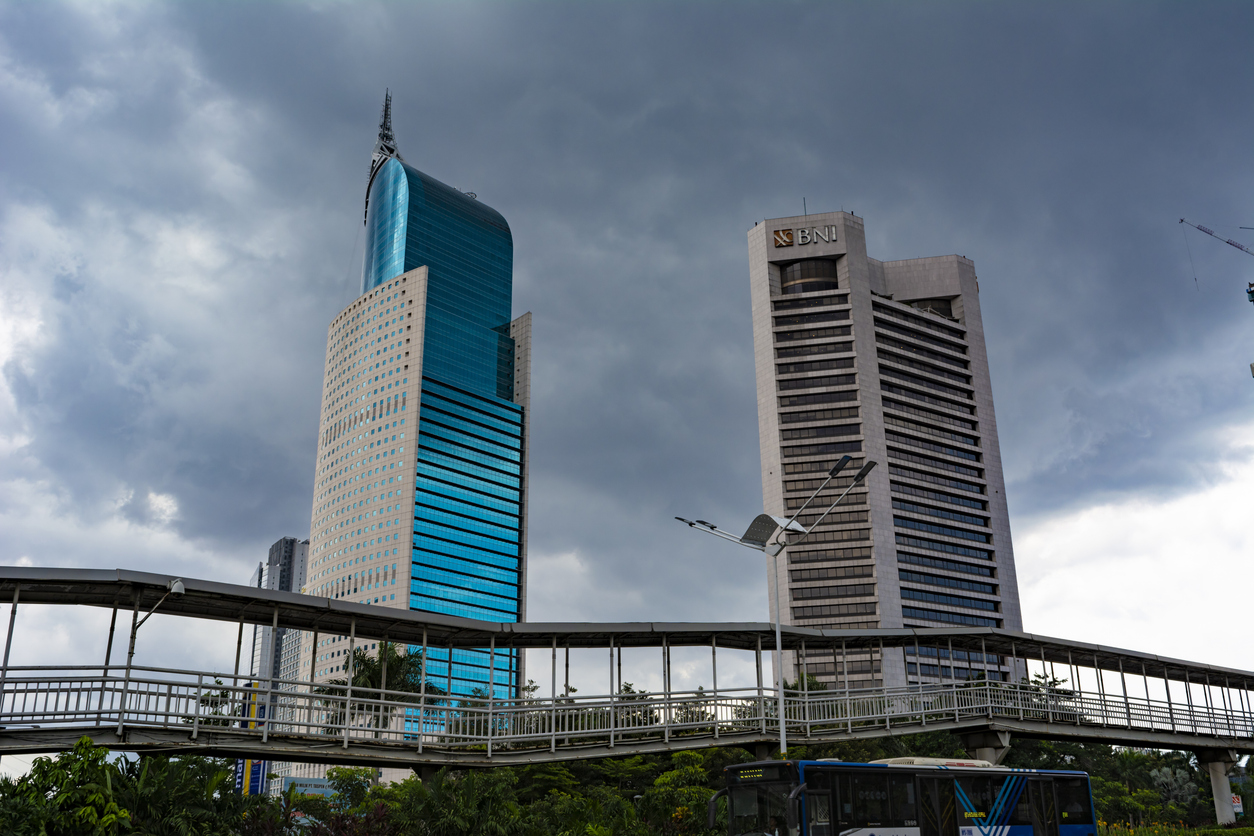
With mobile operators planning to invest USD16 billion between 2024 and 2030 — on top of the USD29 billion already spent since 2015 — Indonesia is making its bid to leap into the region’s top tier. For finance CDOs, it offers a preview of where digital payments, fraud prevention and AI-ready infrastructure are heading across Southeast Asia.
The GSMA’s latest Digital Nations 2025 report positions Indonesia squarely in the middle of 21 benchmarked Asia-Pacific nations, with notable strengths in digital skills and cybersecurity but glaring gaps in innovation investment and rural coverage. Indonesian firms expect to channel 10%, which is below the ASEAN average of 10.4% (though above the global average of 9.8%). Two-thirds rank AI in their top three spending priorities, while over half view 5G-enabled IoT as essential to growth.
According to GSMA Intelligence, the next wave of 5G could unlock USD41 billion in GDP for Indonesia between 2024 and 2030. But there’s a catch: delays in mid-band spectrum allocation, uneven rural coverage (more than 100 million people across APAC remain outside mobile broadband footprints), and limited AI-ready data center capacity threaten to slow momentum precisely when demand is accelerating.
Julian Gorman, head of Asia Pacific at the GSMA, framed the opportunity at: “Indonesia’s scale, entrepreneurial energy and young, connected population give the country a strong opportunity to lead. The priority now is investment where it counts: affordable, predictable spectrum; resilient backhaul; and AI-ready, sustainable data centres paired with visible consumer protections.”
The fraud problem FSIs can’t ignore
Consumer trust is the real infrastructure challenge. The ASEAN Consumer Scam 2025 report reveals that 45% of Indonesian adults report lifetime scam victimization, with 68% of victims losing money. Unlike other markets, Indonesia’s scam contacts skew heavily mobile-first: OTT messaging (50%) and voice calls (44%) both exceed ASEAN averages, with social platforms accounting for 36%.
For finance CDOs navigating digital payment expansion, these are friction coefficients that directly impact conversion rates and customer lifetime value.
The pragmatic response is already taking shape. Indonesia’s three major mobile operators — Telkomsel, Indosat Ooredoo Hutchison, and XLSmart — have formed an alliance deploying GSMA Open Gateway APIs, including SIM Swap, Device Location Verification, Number Verification, Device Swap, OTP Validation, and KYC Match. The goal is to secure payments and logins without broad data sharing.
Consumer sentiment matters: 81% of Indonesians support operators sharing minimal, purpose-bound network signals at high-risk moments to stop fraud. Comfort with telcos sharing personal data jumps from 75% to 81% when explicitly limited to suspicious transactions. That’s meaningful consent for exception-based authentication, the kind of regulatory and social license that takes years to establish elsewhere.
What this means for the FSI infrastructure
CBRE projects a 15-25 GW regional data center capacity gap by 2028. Indonesia is responding with sustainability-linked finance models — EdgeConneX secured a USD403.8 million sustainability-linked loan tying margins to power usage effectiveness, renewable electricity use, and safety KPIs. These structures attract institutional capital while advancing climate commitments, a dual mandate that finance CDOs increasingly face.
The GSMA’s prescription is straightforward: publish measurable rural coverage targets, use time-bound subsidies to de-risk infrastructure, confirm multi-band spectrum timelines, extend live anti-fraud APIs across banks and wallets, and harmonize cross-border data flows to lower compliance costs.
Indonesia isn’t just building 5G networks. It’s stress-testing the next generation of digital payment infrastructure, fraud-prevention APIs, and sustainable data center financing at a population scale. For finance CDOs evaluating Southeast Asian expansion or vendor partnerships, watching how Indonesia executes over the next 24 months matters more than another vendor pitch deck about “AI-powered fraud detection.”
Image credit: iStockphoto/Hani Santosa