
The Airline That Turned a Crisis Into a CX Revolution
- By Winston Thomas
- April 19, 2026
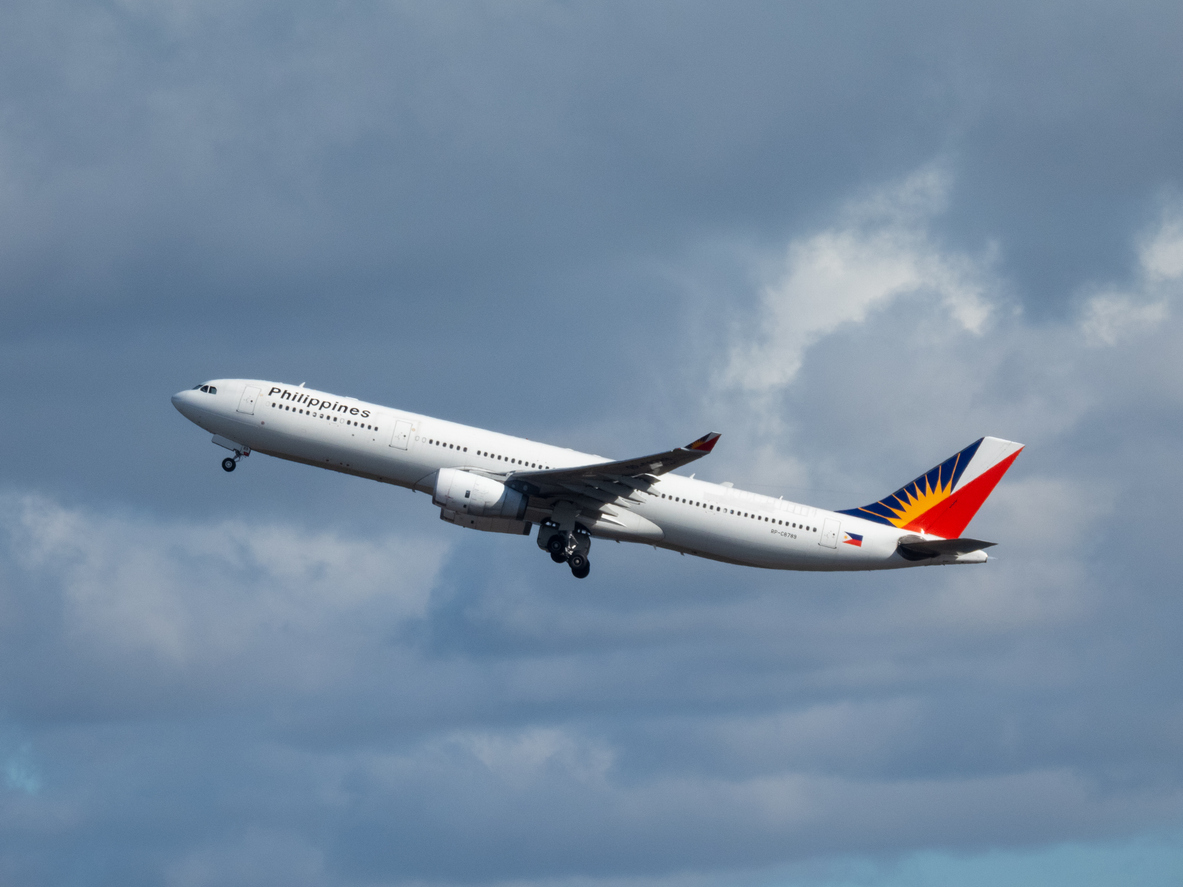
You’ve just landed at your transit destination. Your connecting flight is gone. You call your airline. You wait. And wait. Two hours later, a human voice finally picks up. Feels familiar?
That was the reality not long ago for travelers calling Asia’s oldest commercial carrier, Philippine Airlines (PAL). "With just one partner, wait time was two hours," says Mark Anthony Munsayac, the carrier’s vice president for customer experience. “Issues can happen, but we were making it more difficult for the passengers to get their issues resolved.”
Today, the average wait time at PAL’s contact center is under one minute. Customer satisfaction has surged from the low 60s to around 95%, measured across more than 500,000 surveys annually. The contact center, once a cost sink, now operates as a profit center. And the airline is on the cusp of deploying what Munsayac calls a “super AI agent” — a system capable of autonomously handling roughly 80% of what a live agent can do.
The transformation is a masterclass in what happens when a company stops treating CX as overhead and starts treating it as a strategy.
Flying into the storm
The backstory matters. Munsayac joined Philippine Airlines in January 2021 — peak pandemic and peak chaos — just as the carrier entered Chapter 11 restructuring proceedings in the U.S. Most executives would have reached for the cost-cutting scalpel. He reached for something else.
“Our business is built on trust,” he says. “It’s tested not when things are business as usual, but when people are dealing with challenges. And the pandemic was a perfect time to show them that we understand that cost is a factor,” — but that the value of a better customer experience far outweighs it.

The pitch to leadership was direct: fix the contact center or lose the customers you’ll need to rebuild revenue. Munsayac reframed the entire function as a potential revenue engine. “When you provide a better experience, you earn the right to sell,” he says. “If a passenger’s flight is tomorrow and they don’t have a bag, and you remind them, you’re not selling, you’re servicing.”
Two years after implementation, the contact center’s revenue from ancillary sales — the commissions it would have paid third-party agencies — exceeded its operating costs. The department had its own P&L and was profitable.
Executive skeptics became believers. And the real modernization began.
Strip to the airframe
PAL partnered with Twilio and deployed Twilio Flex as the backbone of its cloud contact center. The move enabled a fundamental shift: from a single-vendor setup to an omnichannel, multi-partner model. Voice, email, WhatsApp, Viber, Web chat, etc. — all unified and feeding into a single agent view.
Robert Woolfrey, Twilio’s vice president for Asia-Pacific and Japan (APJ), frames it from the infrastructure side. “We’re an infrastructure company,” he says. “We provide the tools for builders to build.” Twilio’s role, he explains, is to be the programmable layer that lets PAL integrate whichever AI models, language tools, or communication channels work best — without being locked in.
That matters enormously in Asia. Every market is different. With local LLMs, localized text-to-speech, and distinct messaging preferences, the region doesn’t fit a single template. The plumbing has to be flexible.
One early win: in-app WebRTC calling. Passengers calling PAL from overseas used to rack up roaming charges on a single support call. In-app calling is free. “I have no idea why more airlines don’t do this,” Woolfrey says. “To me, that is one of the smartest things from a customer engagement perspective.”
The architecture PAL chose is deliberately modular. Munsayac is emphatic on this point. “I don’t want partners to be indispensable,” he says. “If you decide to remove one partner, you should be able to replace it, because there’s minimal customization.” He’s seen too many organizations let integrations calcify into legacy debt. The champion-challenger model — pitting partners against each other on performance — keeps everyone sharp.
V1. Rotate. Scale.
PAL’s AI journey follows a deliberate cadence. No moonshots or shiny-tech FOMO. “AI has to solve real problems,” Munsayac says. “You start small. You do a proof of value. You fine-tune the model. Then you scale.”
In mid-2025, PAL launched a generative AI chat experience. The results: a deflection rate of roughly 45%, meaning nearly half of customer concerns now resolve without a live agent. CSAT held. Costs dropped — the airline reports around 30% monthly cost savings in customer service operations. Now, PAL is running voice AI proofs of concept with multiple partners, including Twilio. By the end of April 2026, the target is 70-80% deflection — the threshold Munsayac defines as “super AI agent” status.

Critically, PAL isn’t hiding its human agents. Customers can always escalate. The strategy is organic adoption, not forced automation. “We want people to use the tool because it’s faster and provides accurate information,” Munsayac says. “Not because they’re forced to.”
That distinction is important. Some airlines have slashed live agent headcount and watched satisfaction tank. PAL’s wager is that a frictionless handoff, where context travels seamlessly from chatbot to voice to live agent without the passenger repeating themselves, is the product. The technology is just the mechanism.
Lost luggage: The data problem nobody claims
Here’s the truth beneath every airline’s CX ambition: the data is a disaster.
Woolfrey clearly describes the core architectural challenge. Passengers generate data across a dozen touchpoints — booking systems, loyalty programs, gate agents, in-flight crew, and contact centers. That data sits in silos, owned by different departments, governed by different stakeholders. “It’s not just sitting in silos,” he says. “It's sitting in silos with different owners.”
The antidote — unified customer profile, a single source of truth the AI can access in real time — sounds simple. It is not. Munsayac notes that getting the data right requires buy-in from marketing, loyalty, airport operations, customer support, and IT. Six to eight departments. None of whom automatically share the same annual priorities.
“Data integration needs to be a corporate strategy,” he says. “The CEO and president should be the ones driving it.” Without top-down sponsorship, cross-departmental collaboration becomes a slog. With it, things move. PAL is currently designing an end-to-end customer data platform that unifies loyalty programs, communications, and service operations.
The vision, once the architecture is complete, is far-reaching. Munsayac describes a proactive AI travel assistant: no re-verification when you call, because the system already knows you. No need to open the app to check your flight, because the assistant calls you first. It knows you haven’t checked in. It knows your bag allowance history. “You earn the right to sell,” he says, “when it’s personalized. When it benefits the passenger, it’s really more of providing a great experience.”
Final approach
Philippine Airlines carried more than 16 million passengers in 2025. It serves 31 domestic and 39 international destinations. It is not a boutique operation. And what it has accomplished — turning a bankrupt carrier’s contact center into a profit engine, rebuilding trust in real time, and building a credible agentic AI roadmap — is a live case study for every CX, data, and AI leader in any customer-intensive industry.
The hidden lesson is about sequencing: Fix the plumbing first; earn executive sponsorship; run proofs of value; scale what works; keep humans in the loop; build the unified profile before you promise the AI experience.
Munsayac explains: “We saw the future, defined our vision, and understood we wanted to fix something long-term, not just short-term.”
Two years ago, PAL’s passengers waited two hours to be heard. Today, they wait less than a minute. Tomorrow, the system will call them first.
That is what customer experience leadership looks like in the age of AI.
Image credit: iStockphoto/SCM Jeans







Winston Thomas
Winston Thomas is the editor-in-chief of CDOTrends. He likes to piece together the weird and wondering tech puzzle for readers and identify groundbreaking business models led by tech while waiting for the singularity.