
True Agentic AI Needs You To Break Your Architecture
- By Winston Thomas
- June 23, 2025

The enterprise technology graveyard is about to get a lot more crowded. According to Forrester’s latest research, one in ten Global Fortune 500 companies will completely re-architect their technology stacks this year to support Agentic AI. That prediction, made just six months ago, is already proving conservative.
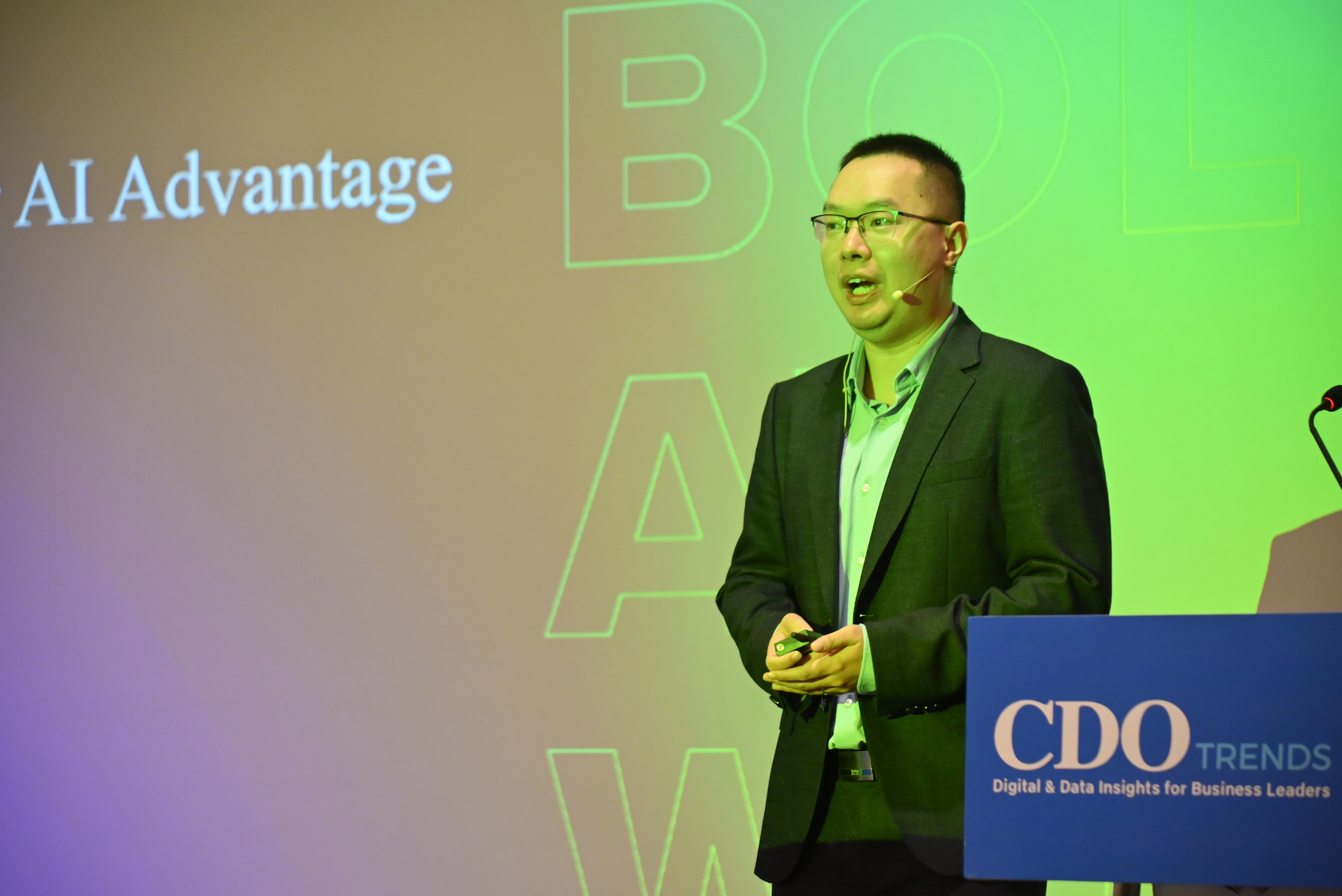
“We made a little bit of a conservative prediction last year,” admits Meng Liu, senior analyst at Forrester, at a keynote presentation for the inaugural Chief Digital & Data Officer Indonesia Summit 2025 in Jakarta. “The percentage from our research with organizations across Asia Pacific will probably reach more than 20%.”
This isn’t about adding another AI tool to your existing infrastructure. This is about acknowledging that everything you’ve built is fundamentally incompatible with where AI is heading.
AI adoption reaches its inflection point
The enterprise AI journey has been a series of false peaks. First came the ChatGPT revolution of 2023, spawning an army of prompt engineers. Then, 2024 brought retrieval-augmented generation (RAG), promising to solve AI’s hallucination problem. But 2025, Liu argues, represents the real inflection point.
“We believe it really is a tipping point for agentic AI, where we’re going to change everything, every business, every organization, and also every aspect of our society,” Liu says.
The distinction matters more than the buzzword suggests. Today’s AI systems, even the sophisticated ones, are glorified question-answering machines. They can summarize documents, generate content, and automate simple tasks. But they can’t execute complex workflows autonomously. They can’t make decisions that cascade across multiple systems. They can’t truly act on behalf of your organization.
Agentic AI can. Or at least, it’s supposed to.
The looming orchestration crisis
Here’s the problem with Agentic AI: building competent systems requires orchestration capabilities that most enterprises simply don’t have. When Liu’s team surveyed organizations globally, orchestration emerged as the top challenge — bigger than governance, data quality, and the usual suspects that typically derail AI initiatives.
“When we introduce a new agentic AI system, we need to build the orchestration capabilities. That’s because in the past we didn’t have those expanded endpoints because of agentic AI systems,” Liu explains. “This is something new for most of the companies.”
Translation: your current architecture wasn’t designed for AI agents that need to coordinate across dozens of systems, making autonomous decisions while maintaining guardrails. It’s like trying to conduct a symphony orchestra when your venue was built for solo performances.
The solution needs an architectural rethink, not another incremental upgrade. Liu describes a new framework called the “automation fabric,” which functions as an operating system for agentic capabilities. This creates constantly evolving, real-time feedback loops that can iterate and adapt without human intervention.
The vertical revolution begins
While most organizations are still playing with horizontal AI applications like internal GPTs that employees can use for generic tasks, the real competitive advantage lies in vertical specialization. OCBC, one of Singapore’s largest financial institutions, provides a blueprint for what this looks like in practice.
The bank built a specialized copilot for relationship managers serving private banking clients. Instead of generic AI assistance, this system can analyze investment strategies, evaluate properties, stocks, bonds, and even cryptocurrencies, then synthesize recommendations tailored to specific client profiles.
“Usually, the relationship manager will take a lot of time to collect and analyze the information, at least three to four hours — sometimes even days,” Liu notes. “But with their copilot, specifically tailored for the relationship manager, it dramatically changes the conversation with the client.”
OCBC also deployed vertical AI agents for compliance monitoring, focusing on financial crime prevention and anti-money laundering. Their legal team uses AI copilots for contract review and drafting. Each system is purpose-built for specific workflows, not generic assistance.
This vertical approach reveals why general-purpose AI tools often fail to deliver transformative value in enterprise settings. Generic intelligence hits a ceiling; specialized intelligence breaks through it.
Closing the translation layer gap
Perhaps the most surprising insight from OCBC’s journey isn’t technical but organizational. The bank’s biggest breakthrough came from creating a new role: AI translators. These aren’t technical roles or business roles, but hybrid positions occupied by people with deep industry expertise who can bridge the gap between what business teams need and what technology teams can build.
“Those translators are actually people with very deep industry knowledge and expertise, many of them coming from management consulting and software companies,” Liu explains. “They interpret the business requirements using the technology team’s words and terms.”
This suggests that successful agentic AI deployment isn’t just about having the right algorithms or infrastructure but about having people who can translate business logic into system architecture and back again. The technology gap may be closeable; the communication gap might be the bigger challenge.
Calculating the hidden ops cost
Forrester’s research reveals that most organizations dramatically underestimate the total cost of agentic AI deployment. Beyond the obvious expenses like data processing, model development, and infrastructure, there lies a massive mountain of operational costs that companies can’t avoid.
AI governance alone requires dedicated teams, continuous model evaluation, and board-level oversight. Business transformation costs include retraining employees, redesigning workflows, and managing organizational change. Model operations involve constant fine-tuning, testing, and deployment cycles.
“We see some kind of hidden AI costs, which are more like operational costs,” Liu notes, describing expenses that can dwarf the initial technology investment.
The framework spans three categories: AI stack costs (infrastructure and models), model ops costs (development and deployment processes), and AI practices costs (governance and training). Organizations that budget only for the first category often find themselves resource-constrained when the hidden costs emerge.
Creating the governance advantage
The most mature organizations are discovering that AI governance can’t be bolted on after deployment but must be embedded from day one. Liu outlines a four-phase approach that starts with equipping data scientists with a deep understanding of corporate values and ethics.
“You cannot only have your data scientist team technically sophisticated. You also need to equip them with the knowledge of your corporate values, ethics, and responsibilities,” he explains.
The evolution continues through continuous model evaluation, board-level involvement, and ultimately a federated approach where AI governance becomes everyone’s responsibility, not just the technology team’s.
This represents a fundamental shift in how organizations think about AI risk. Traditional approaches focus on containing AI within technical boundaries. Agentic AI systems, by definition, operate across those boundaries, requiring governance frameworks that span the entire organization.
The three-year reality check
Despite the hype and the billions in investment, Liu delivers a sobering reality check: truly autonomous agentic systems remain at least three years away. Current implementations are what Forrester calls “Agentic advantaged” — more sophisticated than basic generative AI, but far from fully autonomous.
“Most of the companies are sitting in the middle. They kind of have some kind of advantage in applications or use cases,” Liu observes. “No organization had really achieved a fully autonomous architecture or a fully-autonomous situation.”
This timeline matters for strategic planning. Organizations rushing to rebuild their entire technology stacks for agentic AI may be premature. But those ignoring the trend entirely risk being left behind when the technology matures.
It also means that companies that start building orchestration capabilities, vertical AI specializations, and governance frameworks today will have a three-year head start on everyone else. But it requires organizational grit and the boldness to rethink the entire IT playbook.
Image credit: iStockphoto/Deagreez








Winston Thomas
Winston Thomas is the editor-in-chief of CDOTrends. He likes to piece together the weird and wondering tech puzzle for readers and identify groundbreaking business models led by tech while waiting for the singularity.