
They Lied: SaaS Isn't Saving You Time, It's Stealing It.
- By Winston Thomas
- March 09, 2025

Your workforce is hemorrhaging productivity. Right now, as you’re reading this, your employees are toggling between applications 1,200 times daily, squandering a full month of productivity annually. They’re wasting nine hours weekly hunting for information scattered across email, chat apps, and documents. And you — the CHRO — are likely the unwitting architect of this digital labyrinth.
Welcome to the age of SaaS sprawl, where well-intentioned digital transformation initiatives have morphed into organizational quicksand.
The context-switching tax
For talent development professionals, the cognitive impact of app-hopping represents a hidden tax on learning and performance.
Harvard Business Review research confirms the average worker toggles between apps 1,200 times daily. This constant switching can lead to a 30-day annual productivity loss.
“It’s five minutes here, ten minutes there, but that’s a lot of time and brainpower wasted,” reveals Mark Dembitz, the general manager for APAC at Lark Technologies, a company that sees itself as an enterprise superapp for productivity and collaboration. (The Lark superapp is developed by ByteDance but operates it separately from the China-only Feishu.)
For CHROs implementing performance management systems or leadership development programs, this cognitive fragmentation undermines even the best-designed initiatives.
The speed paradox that CHROs know
This cognitive burden is not accidental. It stems from deeper organizational issues, primarily the speed paradox. “SaaS sprawl exists, and it is a significant roadblock in digitization today, particularly with SMEs,” says Dembitz.
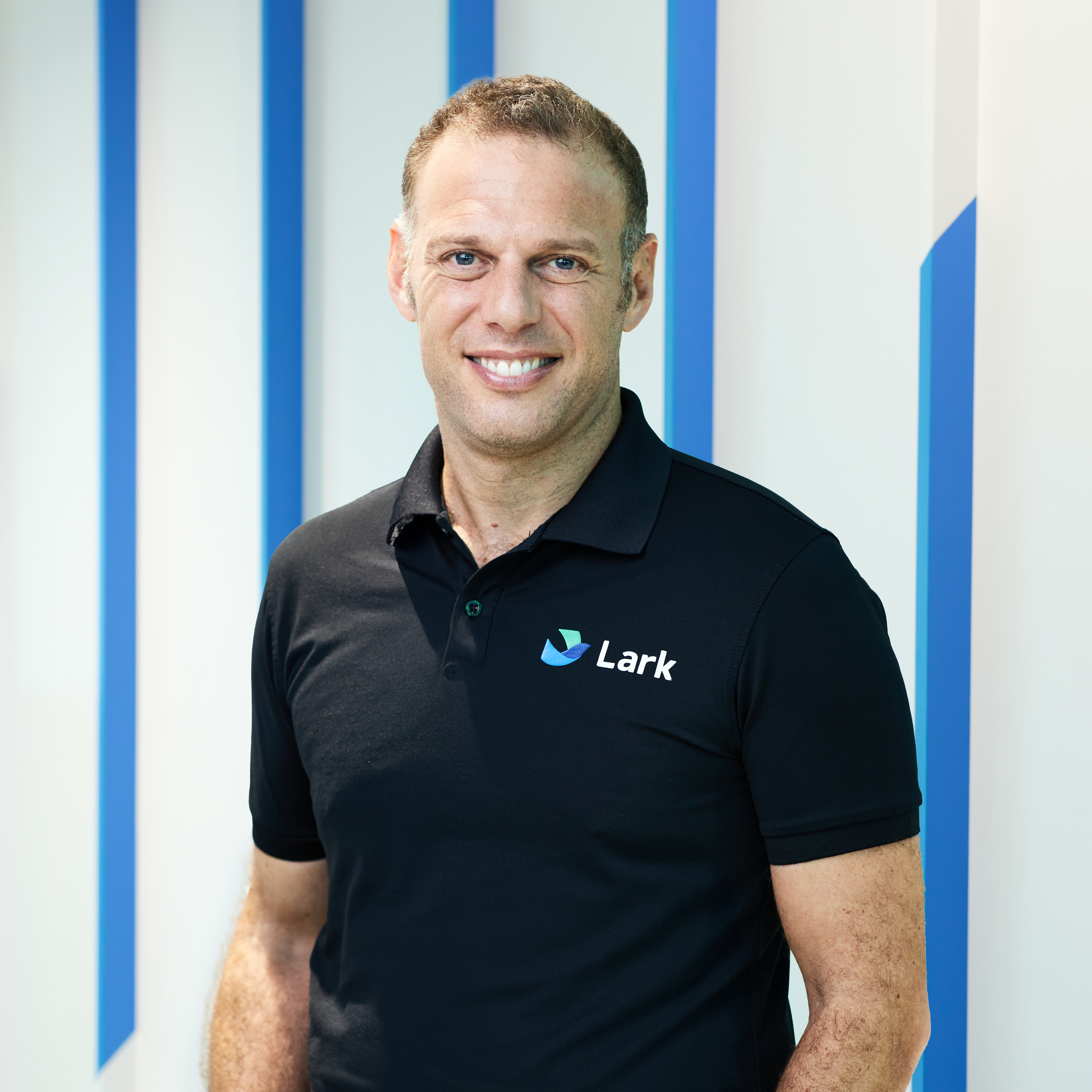
The irony? The very tools meant to speed up business are now applying the brakes. “Speed matters. Today, it’s not the big that eat the small; it’s the fast that eat the slow,” Dembitz emphasizes.
This explains the procurement conundrum facing talent acquisition and HR operations teams: rigid procurement processes slow nimble organizations down, yet the alternative — departmental leaders independently subscribing to tools — creates chaotic tech ecosystems.
“You buy one SaaS tool, and then another, and another. Very quickly you’re sitting on top of, if you’re lucky, 20 tools. In larger organizations, you’re talking about several hundred SaaS tools across various departments,” Dembitz explains. “What starts with really great intention of getting things done more efficiently eventually leads to things that are substantially less efficient.”
C-suite abdication: The leadership vacuum
SaaS sprawl isn’t just an IT problem; it’s actually a leadership failure. “Tools should be driven by the C-suite,” Dembitz argues. “Why? Because the tools you use shape the way you work.”
This represents a fundamental shift in how CHROs should conceptualize their technology stack. Instead of delegating software decisions to IT or individual departments, executive leadership must recognize that technology choices directly shape organizational culture.
“The tooling a company uses drives culture,” Dembitz states. “As we know, Peter Drucker’s famous comment that culture eats strategy for breakfast. I’d probably extend that to culture eats strategy and IT for breakfast.”
This perspective places SaaS consolidation squarely in the CHRO’s jurisdiction. Employee experience, talent retention, and organizational effectiveness all hinge on your technology ecosystem. When CHROs abdicate this responsibility, they surrender their influence over workplace culture.
Singapore’s hybrid work revolution needs SaaS simplification
SaaS simplification becomes important when governments like Singapore’s embrace hybrid work policies, presenting both opportunities and complications for workforce planning. As employees scatter between home and office, unified digital workspaces become essential.
“This question of hybrid — are you coming back to the office? — from a corporate perspective, I think this is yesterday’s conversation,” Dembitz challenges. “I don’t think it should matter so much. Our job at Lark is simply to facilitate that and make companies work as efficiently as they can, regardless of what they choose.”
This perspective frees CHROs from location-based workforce management, focusing instead on outcome such as performance metrics and digital employee experience. The key is ensuring your workforce has seamless access to tools regardless of location, which is a challenge when dealing with fragmented SaaS ecosystems.
The all-in-one solution vs. vendor lock-in
Of course, vendor consolidation debate brings back a classic CHRO dilemma: Should they standardize on fewer platforms for cohesion or diversify to avoid vendor lock-in and dependency?
“What happens if I’m putting all my eggs in one basket?” Dembitz acknowledges this common concern. “But at the end of the day, for most companies strategically, it comes down to the same question: What can we do to beat our competition?”
A unified platform can create a cohesive employee experience while addressing security concerns associated with BYOD policies. “If you have a corporate tool like Lark to manage all those communications, that solves a lot of those cyber problems,” Dembitz notes, highlighting features like personalized watermarks that prevent screenshot leaks are becoming crucial protection for confidential HR documents and compensation data.
The frontline connection
Perhaps what is most compelling for CHROs is how unified tools can bridge headquarters-frontline divides, directly addressing retention challenges.
“What tends to happen, especially with frontline-heavy organizations, is that frontliners feel very disconnected from office workers,” Dembitz observes. “Then you have a lot of churn in the frontline, and that costs companies a lot of money and time.”
ZUS Coffee, a Malaysian success story, illustrates this principle. By connecting everyone from CEO to barista, they’ve created a cohesive culture while expanding rapidly. “You can minimize [employee] churn by just making people feel that they really belong to the company,” Dembitz says.
The CHRO imperative
For CHROs, it’s clear that the SaaS sprawl isn’t merely a technology problem — it’s a workforce effectiveness crisis demanding executive intervention. It is also not going away anytime soon unless they step in.
“The companies that we see really transforming effectively are those where the C-suite has the courage to say, ‘This is going to be a bit painful, but we’re going to rip the bandaid off,’” Dembitz concludes.
For forward-thinking CHROs, conquering SaaS sprawl represents an opportunity to reclaim productivity, strengthen culture, and create a unified employee experience from the headquarters to the frontlines. The question isn’t whether you can afford to consolidate your digital workspace; it’s whether you can afford not to, if you want to remain competitive and foster a productive, unified workforce.
Image credit: iStockphoto/eggeeggjiew








Winston Thomas
Winston Thomas is the editor-in-chief of CDOTrends. He likes to piece together the weird and wondering tech puzzle for readers and identify groundbreaking business models led by tech while waiting for the singularity.